
National Standards for Medical Accompaniment About to Take Effect: Who Can Accompany Patients and What Can They Do?
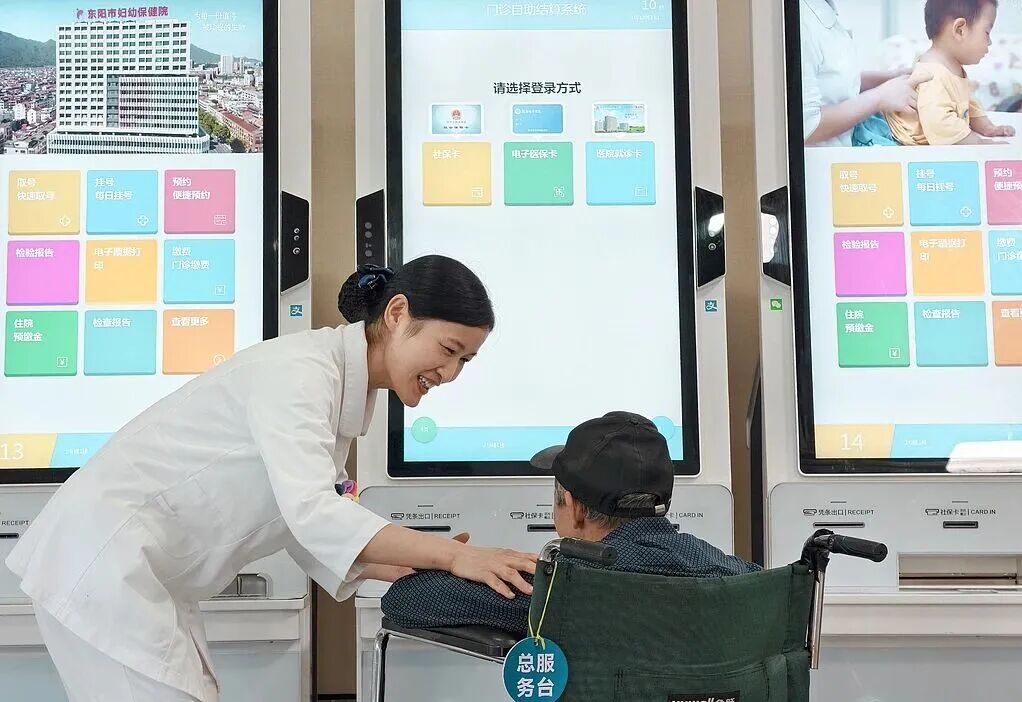
Elderly people going alone to large hospitals to see a doctor cannot find the departments, do not know where to go to pay fees or collect medicine; some out-of-town patients going to large hospitals in other cities “lose their bearings”… Targeting the pain points patients face when seeing a doctor, the medical accompaniment industry has gradually emerged, but due to the lack of service standards, problems such as blurred boundaries and uneven service quality exist.
China’s first national standard for the medical accompaniment industry, “Basic Requirements for Socialized Medical Accompaniment Services,” will be officially implemented starting November 1.The standard clearly limits service providers to “institutions,” and also clarifies what medical accompaniment services can do and cannot do. After the national standard for medical accompaniment takes effect, how can the public’s need for medical accompaniment be met more safely and effectively?
Who can provide socialized medical accompaniment services?
According to the new national standard, providers of socialized medical accompaniment services are “institutions.” The accompaniment service personnel (medical accompaniers) of institutions directly provide accompaniment services to service recipients. Service recipients are those who have difficulty seeking medical care due to mobility, cognitive, or regional differences, or individuals seeking a better medical experience. Institutions may obtain revenue by providing socialized medical accompaniment services.
Data from Qichacha shows that as of October 27, there were 935 existing medical accompaniment-related enterprises in China, mainly distributed in Northeast China and East China, accounting for 25.56% and 19.89% respectively. In terms of registered capital distribution, nearly 90% of related enterprises have registered capital within 2 million yuan. In terms of registration volume, the number of newly registered medical accompaniment-related enterprises in 2022 increased by 995.45% year on year to 241, and reached 378 in 2023, a new high for registrations in nearly a decade. In 2025, registrations reached 215; so far this year, 144 related enterprises have been registered.
What does medical accompaniment service include?
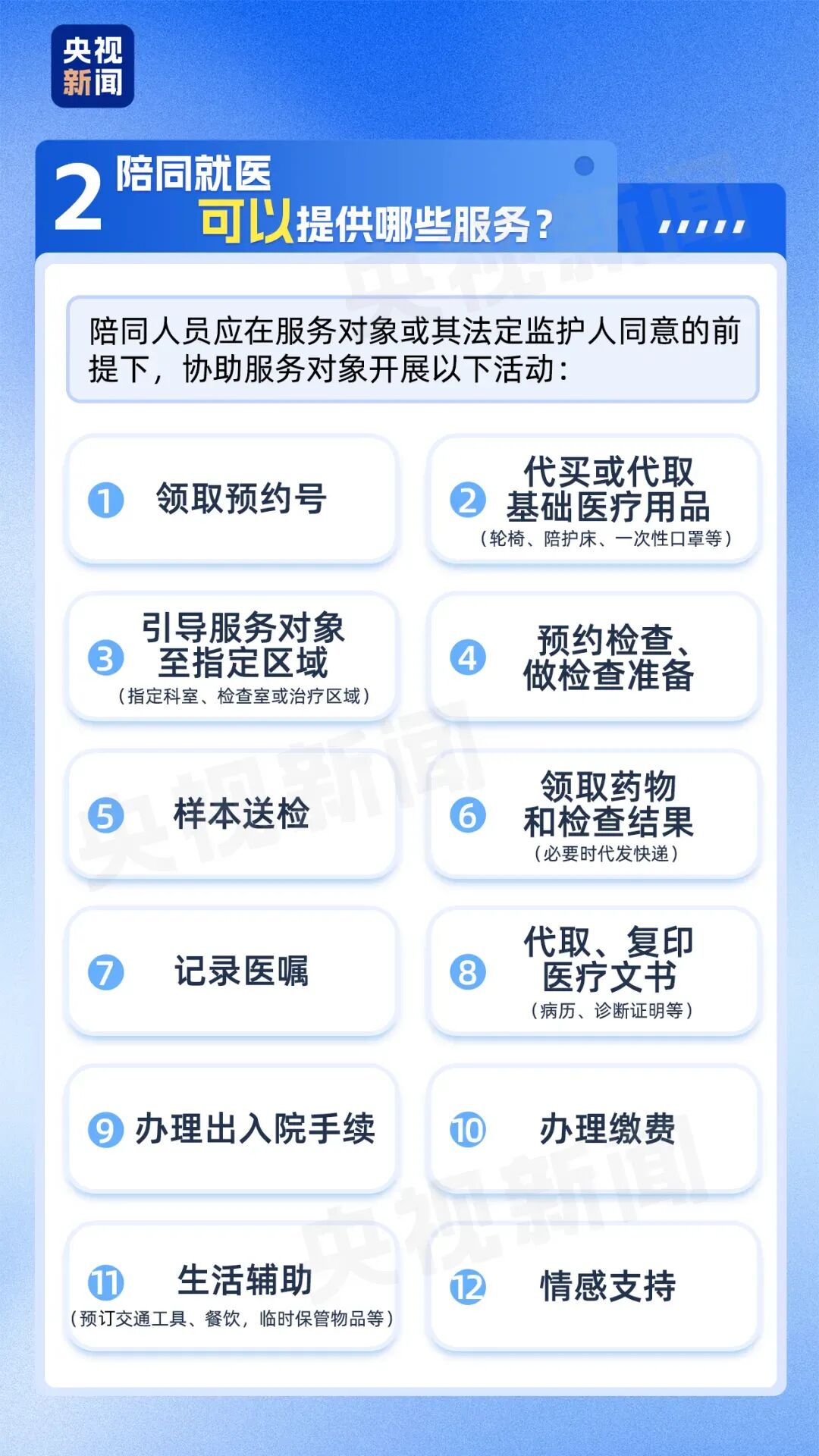
With the consent of the service recipient or their legal guardian, the medical escort may queue to obtain appointment numbers, schedule examinations, prepare for examinations, purchase or collect basic medical supplies on behalf of the recipient such as wheelchairs, escort beds, and disposable masks; guide the service recipient to designated areas, such as the department for consultation, examination rooms, or treatment areas; help the service recipient submit samples for testing, collect medications and examination results, record medical orders, and collect or photocopy medical documents such as medical records and diagnostic certificates on their behalf; handle admission and discharge procedures and make payments, provide living assistance during the visit, such as booking transportation and meals, and temporarily keeping belongings; and provide emotional support during medical visits.
Which services provided by medical escorts are considered violations?
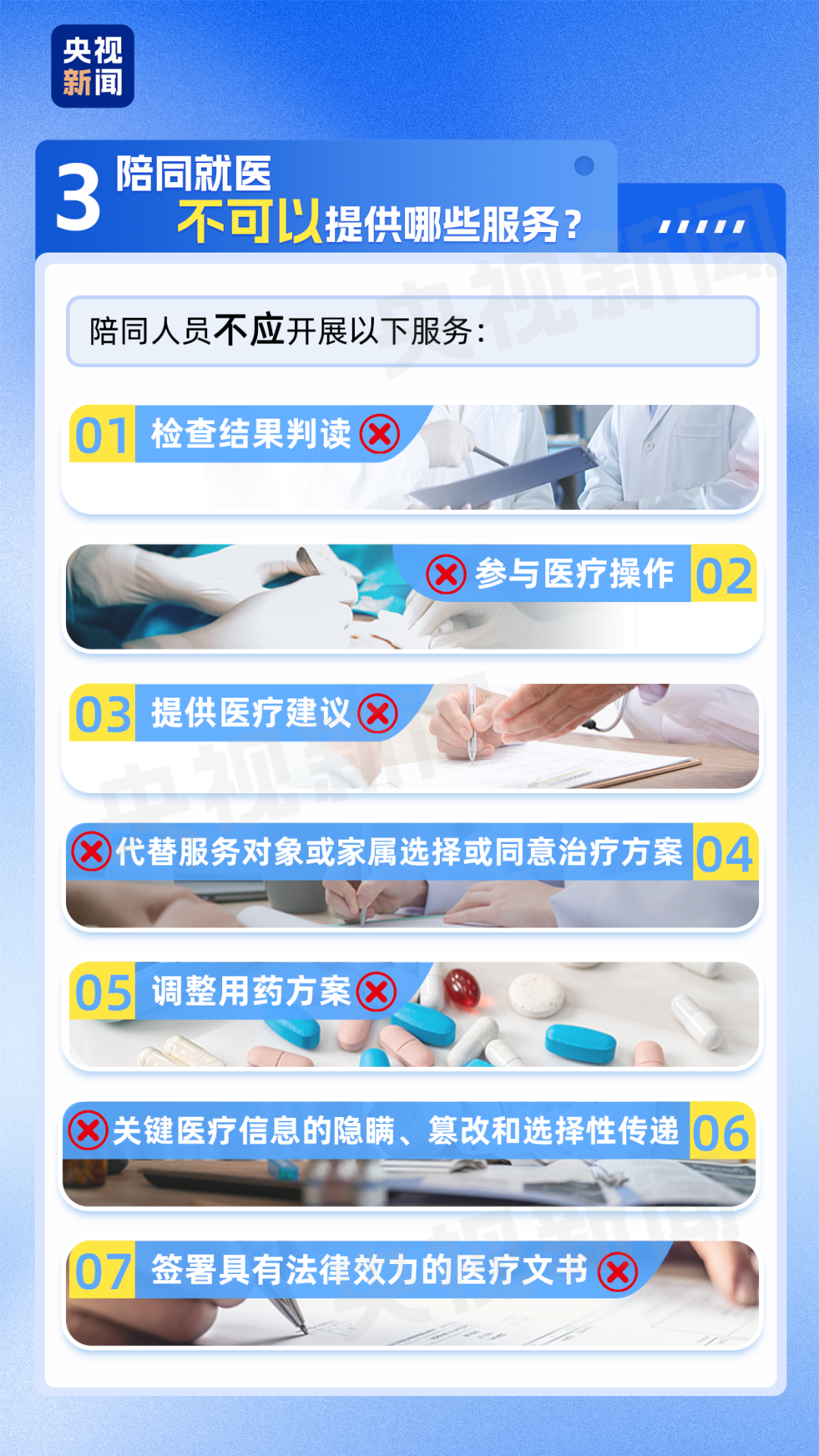
Medical escorts are not healthcare professionals; they must not interpret examination results, participate in medical procedures, provide medical advice, adjust medication plans for service recipients, choose or consent to treatment plans on behalf of service recipients or their families, conceal, tamper with, or selectively convey key medical information about service recipients, or sign medical documents with legal effect on behalf of service recipients.
Explicitly limiting service providers to ‘institutions’
What problem is this intended to solve?
Du Peng, dean of the Institute of Health China at Renmin University of China, believes that clarifying that service providers are institutions rather than individuals plays an important role in two respects:
On the one hand, institutions bear relevant responsibilities: they must verify the qualifications of escort personnel, train them, and purchase relevant insurance for them, so that trained escorts can provide better services.
On the other hand, before there were national standards, patients encountered three types of problems: first, scalpers in hospitals used the pretext of medical escorting to charge higher prices, when their real purpose was to make money. Second, escort personnel were untrained and, driven by the motive to make money, would misinterpret diagnostic results and recommend medications and treatment procedures. Third, service items were unclear, making disputes difficult to resolve and leaving no responsible institution.
Therefore,the national standard explicitly limits service providers to ‘institutions,’ which can strengthen oversight, provide high-quality services, and also better protect patients.
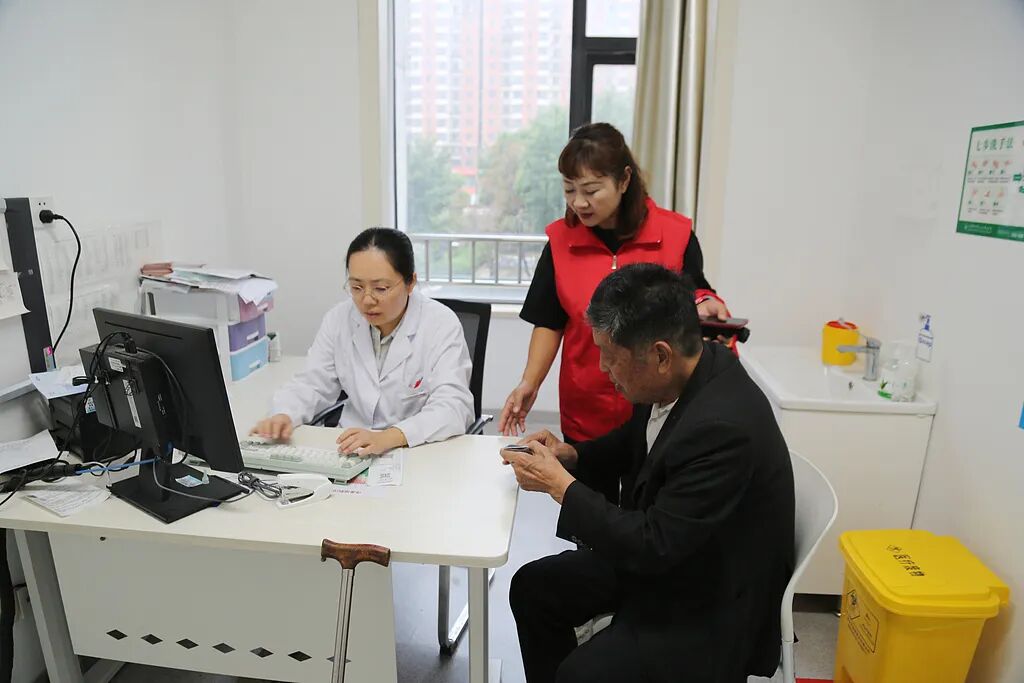
How can medical companions grasp the line between what they may and may not do?
Du Peng said that the 12-item positive list in the national standard for medical companionship clearly defines what can be done, while the 7-item negative list sets out red lines that must not be crossed; these are explicit provisions made in response to common current problems.
Under the regulations,medical companions can only provide auxiliary services, including accompanying patients to register and collect medicines,However, they must not make medical judgments, and must not judge things the doctor did not mention or mislead patients just because they have visited hospitals frequently themselves.
How can grassroots areas truly implement the national standard for medical accompaniment?
Du Peng believes that there are significant differences in grassroots services between urban and rural areas, and the implementation of the national standard needs to be advanced through precise classification.
-
In first- and second-tier cities, there is high demand for medical care among older adults, quality medical resources are concentrated, and demand for medical accompaniment is large, so the national standard for medical accompaniment should be strictly implemented.
-
Older adults are the main users of medical services, so the implementation of the national standard for medical accompaniment can be combined with elderly care service subsidies and support measures, making services accessible and prices acceptable, rather than treating it as a fully market-based activity.
-
In areas with relatively few medical resources, volunteer services and inclusive services should be encouraged during medical visits, especially mutual-aid services.In the initial stage, it may not be necessary to implement standards as strictly as in large cities, but there should still be training and corresponding emergency plans, including clearly defining what can and cannot be done. Implementation can differ from first- and second-tier cities, with stronger advocacy.